ClawBud vs Marblism: Publishing Workflows and AI Work Limits
· ClawBud editorial team
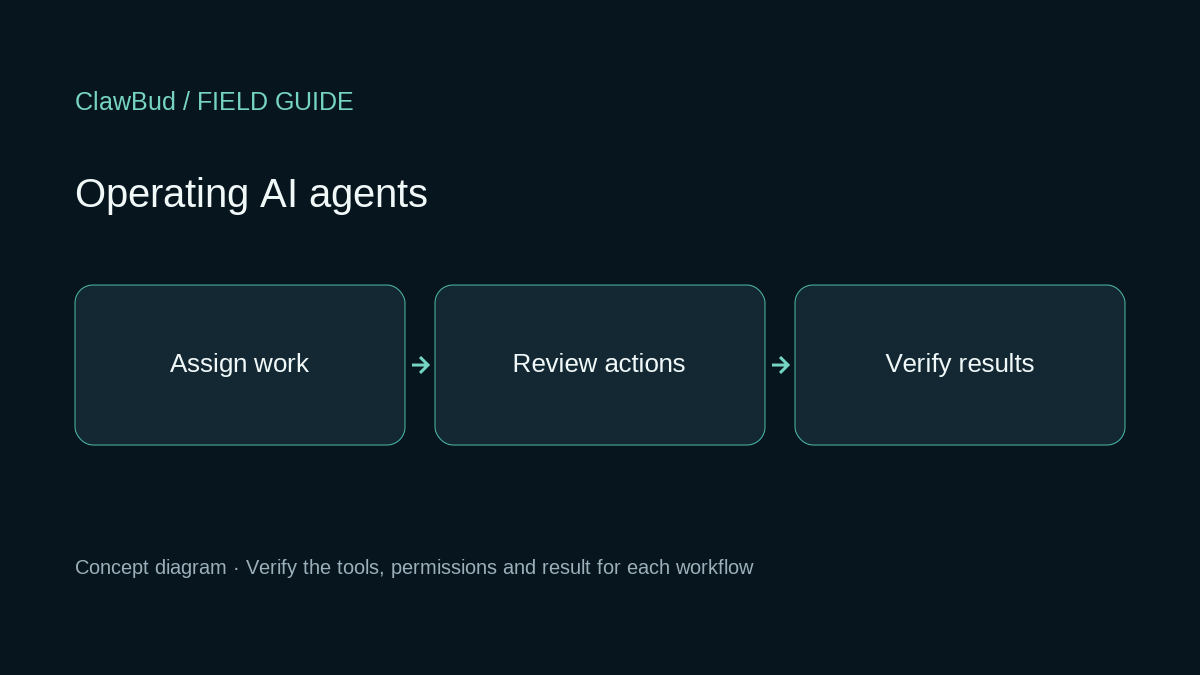
Marblism is worth evaluating when your business wants a prepared team for work such as email drafts, social posts and website content. ClawBud is relevant when you need a managed environment for supported agent runtimes and an API around your own agent workflow. For a recurring publishing job, compare the handoff from approved source material to a visible article, including who can authorize the final write.
Reviewed November 16, 2026. This comparison uses current primary documentation and ClawBud's repository-backed product scope. We have not purchased a Marblism plan, connected a customer site or performed a comparative publishing test. ClawBud is operated by AI Buddy; this is our comparison. The illustration is a concept diagram, not a product screenshot.
Marblism supplies a publishing handoff
Marblism's getting-started guide describes named employees with their own chats and business tasks. Penny writes blog drafts; Walter builds and hosts websites on hours plans. It also describes separate business workspaces, each with its own team and Brain knowledge. That packaged setup can suit an owner who wants a defined place to review content.
The Penny–Walter publishing instructions document a concrete sequence: create a draft, review it, then publish through the enabled Walter connection or ask Walter to publish it. The site needs an initial publication before its blog is live. Later posts receive their own blog pages without republishing the entire site. Only the workspace owner can enable the Walter connection later in Penny's settings.
Check the path for the website you actually use. This documented Walter handoff does not establish that every external CMS has identical setup, review or update behavior. Ask for a demonstration on a disposable site using an invented company brief. Open the resulting page without the editor session and check that the approved revision is the one readers receive.
ClawBud leaves workflow design with your team
ClawBud's managed environment supports agent runtimes including OpenClaw. Its Agent API provides account-scoped agent management and messaging. Those interfaces are useful when your application needs to address a particular agent and keep the surrounding business process under its own control.
A CMS publisher, its credentials and its approval rules still need configuration. An agent message is not evidence that a blog post was published. Ask which runtime and tools will be installed, where the draft will be stored and how your editor will approve that exact version. If you need a ready-made Penny–Walter experience, evaluate that documented workflow directly; a managed runtime requires a separate implementation decision.
Standard ClawBud agents have separate identities, workspaces, memory files and sessions while sharing the account VM, gateway, host tools and provider credentials. Restricted managed-isolation controls are available to approved accounts through the customer API. They are not a separate-machine promise for every named agent. Review the actual account boundary before putting confidential client drafts in one environment.
Find every action that can leave the workspace
The Marblism getting-started guide says social and blog content begins as drafts, with publication or scheduling authorized by the user. It also documents an exception worth checking during onboarding: Eva can email meeting summaries to other participants automatically after meetings with action items, and that setting can be disabled. Reviewing blog drafts therefore does not describe every outbound action in the workspace.
On either product, make a short action register for the work you are delegating. For a blog, record who owns the website connection, which site it targets, who reviews factual claims and which action makes the article public. Include meeting summaries or follow-up emails if they are part of the same process. Demonstrate pausing the relevant work and removing a connection before relying on that control.
Our agent-permissions guide helps define the allowed actions. Confirm those limits in the configuration you receive. A written instruction to wait for approval needs an implementation that staff can actually inspect and use.
Hours and hosting plans measure different things
Marblism's hours-plan documentation distinguishes current plans from older subscriptions with seats and employee levels. Current hours plans share a monthly pool across the owner's workspaces; teammates use the owner's plan. The guide describes work pausing when the monthly hours run out and also retains a daily fair-use limit. Unlimited team members does not mean unlimited work.
The Penny–Walter guide says writing consumes hours while publishing to Walter does not. Ask how revisions, retries and any additional employee work affect the pool. Check the current offer against your billing cadence and account type, especially if you already hold an older subscription. We do not quote a numerical subscription price here.
For ClawBud, inspect the current hosting plan, the model-usage arrangement and external-service charges for your chosen configuration. A hosting subscription and a vendor-defined hour of AI work are different billing units. Estimate the complete publishing cycle, including editorial correction and destination checks, before deciding which offer fits your workload.
A proposed article-publication check
This publisher-handoff-001 exercise is fictional and has not been run. Use a synthetic product sheet with a clearly dated price, a test website and a named reviewer. Keep the same source and acceptance conditions for each shortlisted configuration.
- Request one draft using only the supplied sheet. Check its price and source links, and ask for a missing fact to remain unresolved.
- Correct the supplied price before approval. Inspect the saved revision and make sure the reviewer can identify the version awaiting publication.
- Authorize publication on the test site. Open the public article, image and canonical URL without the editor session; compare the full text to the approved draft.
- Make the publication result uncertain, or describe that situation if a fault exercise is not authorized. Require a destination check before deciding whether to retry. Record how the operator identifies an already-created article.
Leave actual results, evidence URLs, usage charges and the review decision blank until an authorized evaluation occurs. Do not count a generated draft, an API receipt or a scheduled job as a verified public article. The pre-production testing guide gives a broader procedure for gathering that evidence.
Choose Marblism when its prepared employee workflow matches the site and review process you want. Consider ClawBud when supported-runtime control and an application-driven workflow justify configuring the publishing path yourself. Ask each provider to show your intended handoff before committing. Neither product's documentation establishes that your particular content will rank or be recommended by a search engine.