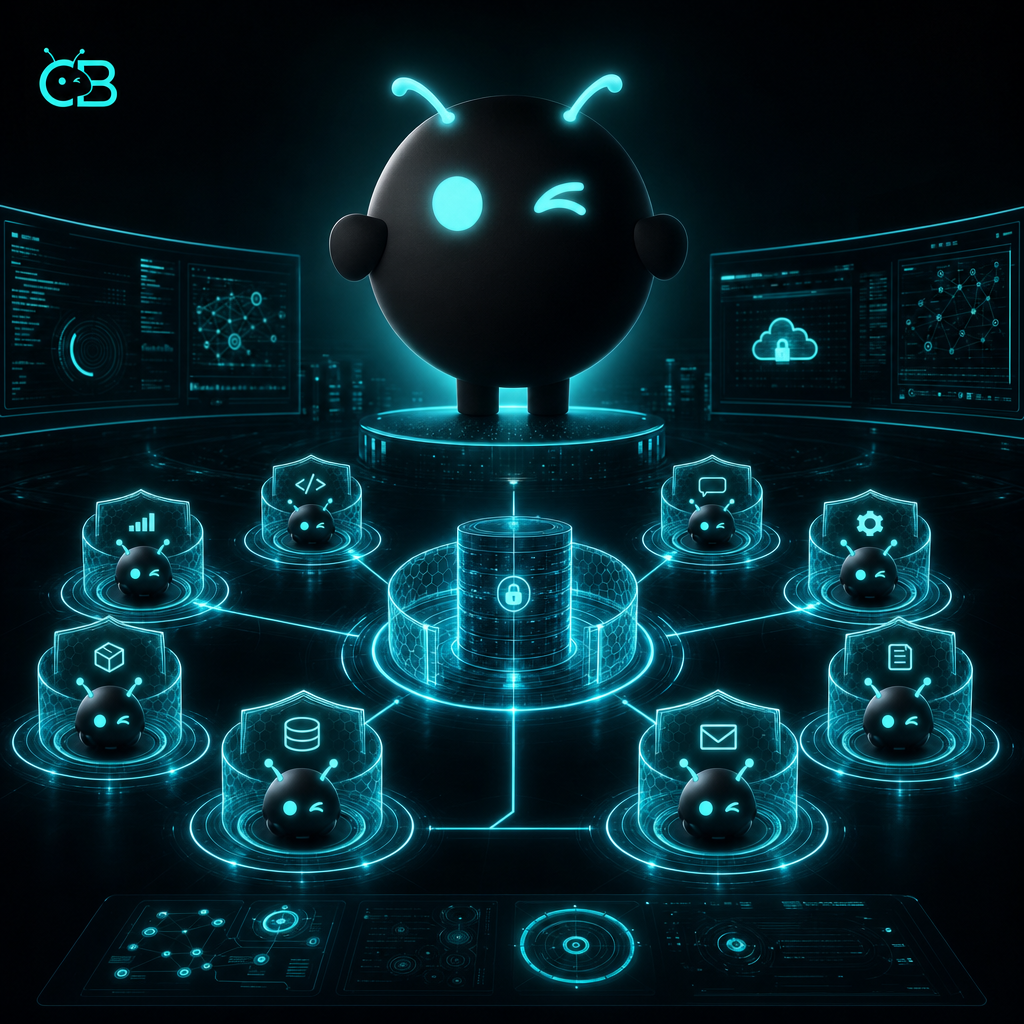
A huge context window is useful. No argument there.
MiniMax M3 showing up with a 1M context angle is exactly the kind of model news agent builders should pay attention to. Long context changes what an agent can read in one run: bigger docs, longer tickets, more code, deeper customer history, messier research dumps.
But here is the uncomfortable part: raw context is not memory.
It is a bigger desk, not a better filing system. If your OpenClaw agent army is going to do real work across days, teams, projects, inboxes, customers, and approvals, you need more than a model that can swallow a mountain of text. You need an Agentic OS around it.
That is the ClawBud bet: a fully managed Agentic OS for your AI agent army, built around OpenClaw, Hermes Agent, persistent vaults, private workspaces, and safe execution on a private cloud computer.
The MiniMax M3 trend is about capacity. The agent problem is about continuity
Model capacity keeps moving fast. MiniMax M3 is now part of the current model routing conversation alongside GPT-5.5, Claude Opus, and other flagship models. That matters because agent work is rarely a neat single prompt.
A serious agent might need to read:
- a product spec
- a Slack thread
- a customer email chain
- a GitHub issue
- yesterday's notes
- a pricing page
- a previous decision from the founder
- a support transcript from last month
Long context helps. It lets the model reason over more material before it answers or acts.
Still, a business does not run on one giant prompt. Work repeats. Customers return. Decisions age. Projects split. Agents need to remember what should survive the current session and what should be ignored tomorrow.
That is where a managed OpenClaw workspace beats a bare model call.
Why context alone gets messy
If you have ever pasted too much into an agent, you know the feeling. At first, it looks powerful. Then the cracks show.
The agent may treat old context as current. It may miss the one instruction that matters. It may drag irrelevant notes into a new task. It may sound confident because the information is nearby, even when the real source of truth changed three days ago.
This is not a model failure as much as an operating problem.
An AI agent army needs a place where knowledge is stored, edited, merged, scoped, and reused. It needs memory that humans can inspect. It needs boundaries between agents. It needs a way to separate customer facts from project notes, private files from public context, and durable rules from temporary brainstorming.
ClawBud treats memory as infrastructure, not decoration.
OpenClaw Memory Vault: persistent knowledge for the whole agent army
With ClawBud, OpenClaw is not dropped into an empty box and left to figure life out alone. It runs inside a managed environment with persistent memory, files, browser tools, skills, integrations, and automation.
The OpenClaw Memory Vault gives the agent a durable place to keep the facts it should carry forward. That can include company rules, customer preferences, workflows, brand constraints, recurring tasks, and lessons learned from previous work.
The point is not to remember everything forever. That would be chaos with better branding.
The point is to remember the right things in a way the team can manage.
That is the difference between a long conversation and an operational agent.
Hermes Vault: memory for execution, not just conversation
Hermes Agent is one of the core pillars inside the ClawBud agent stack. It is strong because it fits the work layer: tasks, files, browser activity, coding, tools, and real execution.
Hermes Vault extends that idea into memory. The agent should not only know what the user said in a chat. It should know what happened during the work.
What did it try? What failed? What file mattered? Which source was trusted? Which approval is still pending? Which customer should not be contacted without review?
That kind of memory makes an agent safer and more useful. It also keeps the human in control, because the knowledge layer can be inspected instead of hidden inside a massive prompt blob.
Shared vault merge matters when agents work together
A single agent is already complex. An agent army is a different beast. Research, content, code, inboxes, support, and approvals all create useful knowledge. If every agent keeps its own messy memory island, the system gets harder to trust.
ClawBud's shared vault merge direction solves that with controlled knowledge sharing, so useful context can move into the wider workspace without turning every temporary note into permanent truth.
Model routing only works when the workspace is stable
MiniMax M3 may be the right choice for long context. GPT-5.5 may be better for another task. Claude Opus may be the right pick for deeper reasoning. A smaller model may be enough for background cleanup.
The model should change based on the mission.
The workspace should not.
That is why ClawBud is built as the managed layer around OpenClaw and the rest of the agent stack. Your agent army should keep its memory, files, browser state, tools, skills, approvals, and integrations even when the best model for a specific task changes.
Without that layer, model routing becomes a dropdown. With it, model routing becomes part of the operating system.
The private cloud computer is still the point
A bigger context window does not solve isolation.
Agents still need a place to run. They need files. They need browser sessions. They need credentials handled safely. They need per-agent firewall boundaries. They need a workspace that is not shared with other customers.
ClawBud gives each customer a private cloud computer for the agent army. Not a shared container. Not a fragile DIY setup. A full computer managed for agent work, with OpenClaw and the rest of the stack ready in clicks.
That matters more as agents get more capable. The stronger the agent, the more important the operating environment becomes.
What this means for teams building with OpenClaw
If you are experimenting, long context may be enough for a demo. If you are running business work, you need the whole system: OpenClaw as the agent core, Hermes Agent for execution, OpenClaw Memory Vault, Hermes Vault, Agent Inbox, built-in CRM, Business Room, Agent Hub, 1-click integrations, per-agent firewall boundaries, and a private cloud computer that stays yours.
That is the actual shift. Not one model. Not one prompt. A managed Agentic OS where models, agents, tools, memory, and approvals live together.
Start with ClawBud
ClawBud is for teams that want OpenClaw without the DevOps headache, and an AI agent army without duct tape.
Start here: ClawBud
If you want the product overview, read What Is ClawBud?. If you are comparing the stack itself, start with What Is OpenClaw?. You can also check ClawBud pricing when you are ready to choose the right plan.
FAQs
What is MiniMax M3 useful for in an OpenClaw agent army?
MiniMax M3 is useful for long-context work, such as reading large documents, long threads, support histories, research material, and complex project context. In ClawBud, it fits into the wider model routing layer instead of replacing the operating system around the agents.
Is long context the same as agent memory?
No. Long context is what the model can read during a run. Agent memory is what the workspace stores, curates, and reuses across future work. Serious OpenClaw agents need both.
Why does ClawBud include OpenClaw Memory Vault and Hermes Vault?
Because business agents need continuity. The OpenClaw Memory Vault stores durable knowledge for the agent army. Hermes Vault keeps work memory around execution, files, attempts, and decisions.
Why not just use OpenClaw by itself?
You can, if you want to manage the setup yourself. ClawBud is for people and teams who want OpenClaw ready in clicks, with agents, integrations, memory, browser, automation, support, and security already wrapped into a managed Agentic OS.
What does private cloud computer mean in ClawBud?
It means your agent army runs on its own dedicated computer in the cloud, instead of sharing a generic runtime with other customers. That gives your agents a persistent workspace, private files, browser state, and stronger isolation.